Executive Summary
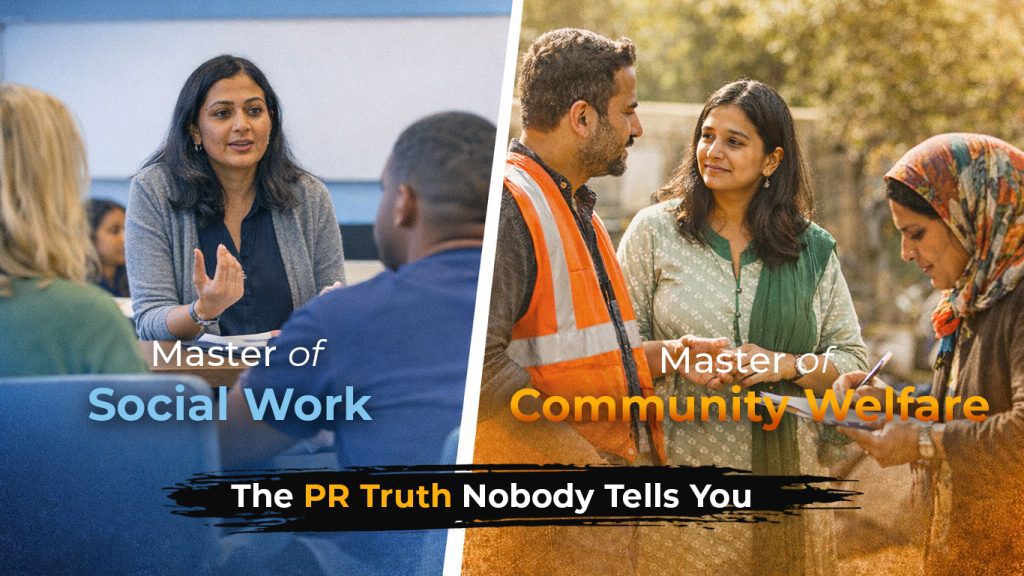
Confused if a ‘Welfare’ course is the same as ‘Social Work’? This common mistake can lead you to a course that has limited PR options or requires much more work experience for a skills assessment. Master of Social Work (AASW-accredited, ANZSCO 272511) offers guaranteed PR through 189/190/491 visas earning 85,000-110,000 dollars, while Master of Community Welfare (ACWA-accredited, ANZSCO 272613) restricts you to state-nominated visas only earning 65,000-85,000 dollars. Social Workers access all welfare jobs plus hospitals, mental health, and child protection roles that welfare graduates cannot enter without course change Australia or transfer from one university to another in Australia costing 30,000-80,000 dollars extra. Choose welfare only if you already have PR or cannot meet Social Work entry requirements.
Part 1: The Problem Everyone Falls Into (And Why It’s Expensive)
The Trap That Costs Students Years and Thousands
Picture this: You’re comparing two master’s programs. Both sound similar. Both work with vulnerable communities. One is called “Master of Social Work,” the other “Master of Community Welfare” or “Master of Human Services.” The welfare course has slightly lower entry requirements—maybe IELTS 6.5 instead of 7.0, or it accepts broader undergraduate degrees without specific social science prerequisites.
You think: “They’re basically the same thing, right? I’ll take the easier one.”
This single decision can cost you:
- 2-3 additional years to PR eligibility
- 40,000-60,000 dollars in extra qualifications to upgrade later
- Restricted job opportunities in high-paying sectors (hospitals, mental health, child protection)
- Ineligibility for Medicare provider numbers (limiting private practice options)
- Difficulty with course transfer if you realize the mistake mid-program
Why Students Get Confused: The Marketing Problem
Universities don’t always clearly explain that these are fundamentally different qualifications leading to different professional outcomes. Course marketing often highlights similarities:
- “Work with disadvantaged communities”
- “Make a difference in people’s lives”
- “Career in community services”
What they don’t prominently advertise:
- One is the gold standard recognized internationally (Social Work)
- The other is a paraprofessional qualification with limited recognition outside Australia (Community Welfare)
- One has clear PR pathways; the other requires additional steps and experience
- One lets you work across all settings; the other restricts you to specific community roles
The consequence? Students discover the limitation only after graduating, when applying for PR or seeking employment in hospitals, government child protection, or mental health services—positions that explicitly require AASW-accredited social workers.
When confused about which course to choose for Australia PR – At this point, changing course means going back to university for an additional 1-2 years, spending another 30,000-60,000 dollars, and delaying your career progression significantly.
Part 2: The Emotional Trigger—Your PR Dreams at Risk
The Reality Check: What Happens After Graduation
Let me share what actually happens to students who choose Community Welfare thinking it’s “basically the same”:
Scenario 1: The PR Roadblock Priya completed her Master of Community Services (Welfare) and applied for ACWA skills assessment for ANZSCO 272613 (Welfare Worker). She discovered:
- Her occupation is on the Short-term Skilled Occupation List (STSOL), not MLTSSL
- She’s only eligible for Subclass 190 or 491 (state-nominated visas), not the independent 189 visa
- Most states rarely nominate welfare workers due to lower demand
- She needs 3 years of Australian work experience for skills assessment (vs. 0-1 year for social workers)
- After spending 42,000 dollars on her master’s, she now needs to complete university of canberra course change course or enroll in a new Master of Social Work program to access better PR options
Total additional cost: 2 years + 30,000-40,000 dollars
Scenario 2: The Job Application Rejection James applied for a hospital social worker position advertised at 95,000 dollars. Despite having a Master of Human Services and 2 years experience, his application was rejected because:
- The position required AASW eligibility
- His ACWA qualification wasn’t recognized for clinical social work roles
- He can only apply for “welfare support worker” positions paying 65,000-75,000 dollars
Salary difference over career: 300,000-500,000 dollars+
Scenario 3: The Course Transfer Nightmare Lisa realized in her second semester that her Community Welfare course wouldn’t lead to social work registration. She wanted to switch to Master of Social Work at the same university but discovered:
- How to transfer from one university to another in Australia processes or even internal course transfer within the same institution meant starting over
- Her completed units weren’t recognized for credit toward the Social Work program
- She lost 6 months of study and 15,000 dollars in fees
These aren’t isolated cases. Every year, hundreds of international and domestic students face these exact scenarios because they didn’t understand the fundamental difference before enrolling.
Part 3: The Solution—Understanding the Real Differences
AASW vs. ACWA: Why This Matters More Than Anything
The single most important factor determining your qualification’s value isn’t the course name—it’s the accreditation body.
AASW (Australian Association of Social Workers):
- Established: 1946
- International Recognition: Member of International Federation of Social Workers (IFSW)
- Regulatory Power: Sets Australian Social Work Education and Accreditation Standards (ASWEAS)
- Global Portability: AASW-accredited degrees recognized in UK, USA, Canada, New Zealand, and 90+ countries
- Career Access: Required for hospitals, government child protection, mental health settings, private practice with Medicare
- PR Pathway: ANZSCO 272511 on Medium and Long-term Strategic Skills List (MLTSSL)
ACWA (Australian Community Workers Association):
- Established: 2009 (much newer)
- Recognition Scope: Primarily Australia-only; limited international recognition
- Regulatory Role: Sets standards for community welfare/human services education
- Career Access: Community development, youth work, disability support, general welfare roles
- PR Pathway: ANZSCO 272613 (Welfare Worker) on Short-term Skilled Occupation List (STSOL) or state-specific lists only
In plain English: AASW accreditation is the passport to global social work practice. ACWA accreditation is a domestic qualification with geographic and sector limitations.
Migration Outcome Comparison: The Numbers Don’t Lie
| Factor | Master of Social Work (AASW) | Master of Community Welfare (ACWA) |
|---|---|---|
| ANZSCO Code | 272511 (Social Worker) | 272613 (Welfare Worker) |
| Skilled List | MLTSSL (best list) | STSOL or regional lists |
| Visa Options | 189, 190, 491, 482, 186 | 190, 491, 482 (limited states) |
| Skills Assessment Authority | AASW | ACWA |
| Minimum Experience for Assessment | 0 years (fresh graduates eligible) | 1-3 years depending on qualification |
| Placement Hours Required | 980 hours minimum (140 days) | 400 hours (varies by program) |
| State Nomination Likelihood | High (consistent demand nationally) | Low to Medium (selective states only) |
| 189 Visa (Independent) Eligibility | YES | NO |
| Current Invitation Trends 2026 | Regular invitations at 65-75 points | Rare invitations, state-dependent |
Translation: Social Work gives you 3-4 visa pathway options. Community Welfare gives you 1-2 options that depend entirely on which states are nominating (and most aren’t).
Career Scope: What You Can Actually Do
This is where the difference becomes painfully clear in job advertisements.
Jobs ONLY Open to AASW-Accredited Social Workers:
- Hospital Social Worker (85,000-105,000 dollars)
- Mental Health Social Worker (90,000-110,000 dollars)
- Child Protection Worker – Government (80,000-95,000 dollars)
- Clinical Social Worker (95,000-120,000 dollars)
- School Social Worker (85,000-100,000 dollars)
- Accredited Mental Health Social Worker (Medicare provider – private practice potential 100,000-150,000+ dollars)
- Senior Social Work positions in government departments (100,000-130,000 dollars)
Jobs Open to Both AASW Social Workers AND ACWA Welfare Workers:
- Community Development Worker (65,000-80,000 dollars)
- Youth Worker (60,000-75,000 dollars)
- Disability Support Coordinator (65,000-80,000 dollars)
- Welfare Support Worker (60,000-75,000 dollars)
- Housing Support Worker (65,000-80,000 dollars)
- Family Support Worker (65,000-85,000 dollars)
Jobs ONLY Requiring ACWA:
- Virtually none. ACWA-accredited qualifications are rarely the exclusive requirement—most community sector jobs accept either ACWA OR AASW, meaning social workers can compete for these roles.
The Critical Insight: Social workers can apply for ALL jobs in both categories. Community welfare workers can only apply for the second category and even then face competition from social workers who are often preferred.
Real Job Advertisement Example: “Mental Health Social Worker – Metro Hospital Requirements: AASW-eligible social work qualification, minimum Bachelor or Master of Social Work Salary: $95,000 + super + salary packaging ACWA qualifications NOT ACCEPTED for this position”
This type of advertisement is everywhere in hospitals, government departments, and mental health services. Community welfare graduates simply cannot apply.
Course Structure and Rigor: Why Social Work is Harder (And Why That’s Good)
Master of Social Work Requirements:
- Duration: 2 years full-time
- Entry: Bachelor degree with 1 year social sciences; IELTS 7.0 minimum (no band less than 6.5)
- Placement: 980 hours minimum across TWO placements in different settings
- Curriculum Depth: Advanced clinical skills, therapeutic interventions, policy analysis, research methods
- Supervision: Intensive supervision by qualified social workers during placement
- Assessment Standards: Rigorous ASWEAS compliance monitored by AASW
- Cost: 8,000-10,000 dollars (CSP domestic) or 60,000-76,000 dollars (international)
Master of Community Welfare/Human Services Requirements:
- Duration: 1.5-2 years full-time (varies)
- Entry: Bachelor degree (often any discipline); IELTS 6.5 (some programs)
- Placement: 400 hours typically (single placement common)
- Curriculum Depth: Community development, broad welfare concepts, less clinical focus
- Supervision: May be by welfare workers or related professionals
- Assessment Standards: ACWA standards (less internationally rigorous)
- Cost: Similar range but shorter duration options available
Why this matters: The more demanding requirements of social work programs aren’t arbitrary—they’re what make the qualification internationally recognized and clinically competent. The rigor is what gives AASW graduates access to complex practice settings like hospitals, mental health crisis teams, and child protection.
Attempting to take shortcuts by choosing “easier” welfare programs means sacrificing:
- International recognition
- Clinical practice capability
- Higher salary potential
- Better PR options
- Career flexibility
The “Switch to Social Work” Reality: Many Do It, All Regret Not Starting There
Here’s what the course change Australia process looks like for welfare graduates who realize they need social work qualifications:
Pathway for ACWA Graduates to Become Social Workers:
Option 1: Master of Social Work with Credit Transfer
- Some universities offer 25% credit (6 months) for ACWA bachelor graduates
- Still requires: 1.5 years study + 30,000-45,000 dollars
- Must meet AASW entry requirements (IELTS 7.0)
- Must complete full 980 hours placement (your previous 400 hours don’t count)
Example: Federation University Australia states: “Graduates of ACWA approved degrees may be eligible for exemptions of 25% or one semester of the Master of Social Work (Qualifying) course”
Option 2: Start Fresh in Bachelor of Social Work
- 4 years full-time
- 80,000-120,000 dollars
- May get some credit for previous study but likely 3+ years remaining
Option 3: Graduate Diploma + Master Pathway
- Some universities offer Graduate Diploma bridge programs
- 1 year + 2 years = 3 years total
- 50,000-80,000 dollars
Reality Check: Most welfare graduates who want to switch spend 1.5-3 additional years and 30,000-80,000 dollars to obtain AASW-accredited qualifications. Many describe this as the “expensive lesson” they wish they’d avoided.
Student Experience – Reddit Thread: “I finished my Bachelor of Community Services thinking I’d work in welfare. Got a job at 62k. Applied for hospital social work jobs—all rejected for not having AASW. Now doing Master of Social Work to fix this. Two extra years, $35k in HECS debt. Should have just done Social Work from the start.”
Managing Change: What to Do If You’re Already Enrolled in the Wrong Course
If you’ve already started a Community Welfare program and realize you want social work qualifications, here’s how to approach managing change course and potentially changing course mid-stream:
Step 1: Assess Your Timeline
- Less than 3 months into first semester: Course transfer is usually possible with minimal penalty
- 1 semester completed: Speak to university about internal course Change Australia options
- More than 1 year completed: Weigh cost of continuing vs. switching (often better to complete and then bridge)
Step 2: Contact Your University Research university of canberra course changes or equivalent policies at your institution:
- Most universities have formal course transfer procedures
- Internal transfers (same university) are easier than external
- Some universities will credit completed units toward Social Work if content overlaps
Step 3: Research Credit Transfer Options
- AASW maintains strict standards but some universities offer credit for ACWA graduates
- You may receive 3-6 months credit (not full degree)
- Contact admissions at multiple universities to compare policies
Step 4: Financial Planning
- Calculate total cost of completing current program vs. switching
- Consider that higher social work salaries offset additional study costs within 2-3 years
- Research if your university offers change management courses through student services to help navigate the transition
Step 5: Migration Strategy
- Consult registered migration agent to understand how course choice affects your PR timeline
- Consider if completing welfare qualification + work experience + later social work upgrade is viable
- Compare total PR timeline for both pathways
Important: Don’t let sunk cost fallacy trap you. If you’re early in a Community Welfare program but your goal is hospital social work, government child protection, or clinical practice, the cost of switching now is FAR less than the lifetime career and salary impact of staying in the wrong qualification.
Part 4: Making the Right Choice From the Start
Choose Master of Social Work If You Want:
Maximum PR Options: MLTSSL listing with access to 189, 190, 491, 482, and 186 visas Clinical Practice: Mental health, hospital, medical social work, therapeutic counseling Government Roles: Child protection, justice, policy development Medicare Provider Status: Accredited Mental Health Social Worker registration for private practice International Recognition: Ability to practice in 90+ countries with IFSW membership Highest Salary Potential: 85,000-150,000+ dollars across career Career Flexibility: Access to ALL social work and welfare positions Professional Recognition: AASW membership carries significant weight with employers
Best Candidates:
- Students who can meet IELTS 7.0 requirements
- Those committed to clinical or complex practice settings
- International students prioritizing PR certainty
- Anyone wanting maximum career flexibility
- Those willing to invest in rigorous 980-hour placement
Choose Master of Community Welfare If You:
Cannot Meet Social Work Entry Requirements: IELTS 6.5 is your maximum or bachelor lacks social sciences Specifically Want Community Development: Passionate about grassroots community organizing, not clinical work Have PR Already: Migration pathway isn’t your concern Prefer Less Intensive Placement: 400 hours vs. 980 hours appeals to your circumstances Plan to Work in Specific Community Sectors: Youth services, disability, housing support where ACWA is accepted Will Later Upgrade to Social Work: Understand you may need to bridge to AASW qualification for career progression
Important Caveat: Even if you choose Community Welfare, recognize you’re choosing a stepping stone, not a destination qualification. Most community welfare professionals eventually pursue social work qualifications for career advancement.
Red Flags to Watch For
Don’t Choose Community Welfare If: **You want to work in hospitals **Your goal is child protection work **You want PR through independent (189) visa **You’re interested in mental health clinical practice **You want to maximize salary potential **You might want to practice internationally
If any of these apply, you MUST choose AASW-accredited Master of Social Work, even if:
- Entry requirements are harder
- IELTS 7.0 seems challenging
- Placement hours seem daunting
- Course costs slightly more
The short-term difficulty is worth the long-term career and migration benefits.
Frequently Asked Questions
Which field of social work makes the most money?
Policy advisory roles, senior management positions, and clinical specialist roles in mental health or healthcare typically command the highest salaries in social work, ranging from 110,000 to 135,000+ dollars annually. Accredited Mental Health Social Workers with Medicare provider numbers operating in private practice can earn 100,000-150,000+ dollars depending on client base. Geographic location significantly impacts earning potential, with Western Australia and rural Queensland offering premium salaries often exceeding 110,000-125,000 dollars.
What is the downside of being a social worker?
The main downsides include exposure to secondary trauma and vicarious stress from working with clients experiencing abuse, violence, and severe disadvantage. High caseloads in understaffed services create overwhelming workloads and bureaucratic pressures. The 980 hours of unpaid field placement during study creates financial hardship for students. Emotional labor, challenging systemic barriers, safety concerns in some settings, and risk of burnout are ongoing challenges requiring strong self-care practices and professional supervision.
What field of social work pays the most in Australia?
Policy and government advisory positions pay the highest in Australia (115,000-135,000 dollars), followed by senior management roles in large organizations (125,000-150,000+ dollars) and clinical specialist positions in mental health, hospitals, or healthcare settings (105,000-120,000 dollars). Regionally, Western Australia consistently offers the highest average salaries (100,000-105,000 dollars), with rural Queensland locations like Rockhampton offering up to 125,000 dollars to attract skilled workers.
What’s higher than a social worker?
Within the social work profession, career progression moves from social worker to senior social worker, then to clinical specialist, team leader, program manager, senior manager, and director of services. Outside direct social work, related higher positions include organizational executives, senior policy advisors, government directors, university academics (associate professor, professor), and independent consultants. Some social workers transition to psychology, counseling, or executive leadership roles in the broader human services sector.
What type of social worker is the highest paid?
Senior policy advisors and program directors in government departments are the highest paid, earning 115,000-135,000+ dollars. Clinical social workers in specialized mental health or healthcare roles with extensive experience earn 105,000-120,000 dollars. Accredited Mental Health Social Workers operating in private practice with established client bases and Medicare provider numbers can earn 100,000-150,000+ dollars. Social workers in remote and regional locations, particularly Western Australia and rural Queensland, receive premium salaries with retention incentives often exceeding 110,000-125,000 dollars.
What is higher than a social worker?
Within social work career pathways, positions above base-level social worker include senior social worker, clinical specialist, team leader, program coordinator, service manager, senior manager, director of social work/services, and executive director. Many social workers also progress into multidisciplinary leadership roles such as general manager of community services, CEO of non-profit organizations, or senior government officials. Academic pathways include lecturer, senior lecturer, associate professor, and professor positions at universities.
What is the difference between a social worker and a welfare worker?
A social worker holds an AASW-accredited Bachelor or Master of Social Work qualification (minimum 980 hours supervised placement), is eligible for AASW membership, and can practice across all social work settings including hospitals, mental health services, child protection, and private practice. A welfare worker typically holds an ACWA-accredited qualification in community services, human services, or community welfare (usually 400 hours placement) and works in community development, youth services, disability support, and general welfare roles. Social workers can work in all welfare positions, but welfare workers cannot work as accredited social workers without obtaining additional AASW-accredited qualifications.
Can I transfer from Community Welfare to Social Work mid-degree?
Yes, course transfer is possible but policies vary by institution. If you’re within the first semester, internal course Change Australia processes at your university may allow you to switch with minimal penalty. After completing significant study (1+ years), most students complete the Community Welfare qualification and then enroll in Master of Social Work with possible credit transfer (typically 25% or 6 months credit for ACWA bachelor graduates). Contact your university’s student services regarding university of canberra course changes or equivalent changing course procedures at your institution to explore your specific options.
Is a Master of Community Welfare recognized for Australian PR?
Master of Community Welfare is recognized for PR but under a less favorable occupation code (ANZSCO 272613 – Welfare Worker) on the Short-term Skilled Occupation List (STSOL), not the Medium-term list (MLTSSL). This means you’re NOT eligible for independent Subclass 189 visa and can only apply for state-nominated 190 or regional 491 visas—which are much more competitive and state-dependent. Additionally, ACWA skills assessment may require 1-3 years of relevant Australian work experience, whereas AASW assesses fresh graduates immediately. For strongest PR options, AASW-accredited Master of Social Work (ANZSCO 272511 on MLTSSL) is significantly superior.
Will ACWA membership help me get jobs?
ACWA membership demonstrates you’ve completed an accredited community welfare qualification and follow the ACWA Code of Ethics, which is valued in community development, youth work, and disability sectors. However, ACWA membership does NOT qualify you for positions specifically requiring AASW-eligible social workers, including hospital social work, government child protection, mental health clinical roles, or Medicare provider status. Many employers in community services accept either AASW OR ACWA membership, meaning social workers can compete for the same positions, often with preference given to AASW members due to more rigorous training.
How much does it cost to upgrade from Community Welfare to Social Work?
Upgrading from ACWA-accredited Community Welfare qualification to AASW-accredited Social Work typically costs 30,000-80,000 dollars and takes 1.5-3 years depending on your pathway. Universities may offer 25% credit (approximately 6 months) for ACWA bachelor or master graduates entering Master of Social Work programs, meaning you’d complete the remaining 1.5 years (30,000-45,000 dollars for domestic CSP or 48,000-57,000 dollars for international students). If you must start a full Bachelor of Social Work, expect 3-4 years and 60,000-120,000 dollars depending on domestic vs. international status.
Does Master of Social Work guarantee better PR outcomes than Community Welfare?
While no qualification “guarantees” PR (as migration policy changes), Master of Social Work provides significantly stronger PR prospects because: (1) Social Worker (272511) is on MLTSSL with access to independent 189 visa, state 190, and regional 491 visas, (2) AASW skills assessment accepts fresh graduates without Australian work experience requirement, (3) regular invitation rounds specifically target social workers at 65-75 points, and (4) multiple states consistently nominate social workers due to national shortage. Community Welfare’s Welfare Worker (272613) is on STSOL, ineligible for 189 visa, requires state nomination that’s much rarer, and may need 3+ years work experience for skills assessment—making PR pathway substantially more difficult and uncertain.
Conclusion: The Choice That Defines Your Career
Choosing between Master of Social Work and Master of Community Welfare isn’t about finding an “easier” path or saving a few thousand dollars in tuition—it’s about making a strategic decision that affects your entire professional life, migration prospects, and earning potential over 30-40 years.
The brutal truth: Community Welfare programs have their place in the sector, but they are not equivalent to Social Work despite similar-sounding course titles. If your goals include clinical practice, hospital work, child protection, maximum PR options, international mobility, or salary potential above 85,000-100,000 dollars, there is only one choice: AASW-accredited Master of Social Work.
Yes, Social Work is harder: IELTS 7.0 is challenging. 980 hours of placement is demanding. The curriculum is rigorous. But these challenges are precisely what make the qualification valuable, portable, and respected by employers, migration authorities, and international professional bodies.
Don’t let the fear of difficulty push you into a qualification that seems easier but closes doors. The students who choose Community Welfare to avoid IELTS 7.0 or heavy placement requirements often spend 2-3 additional years and 30,000-80,000 dollars later upgrading to Social Work anyway—effectively making the “harder” choice eventually, just at twice the cost and time.
If you’re already in a Community Welfare program: It’s not too late. Investigate course change Australia options, speak to admissions about course transfer, and seriously consider whether completing your current program and bridging to Social Work, or switching now, makes more strategic sense for your long-term goals.
If you’re choosing between programs: Unless you have very specific reasons for Community Welfare (already have PR, specifically passionate about community development only, cannot meet Social Work entry requirements even with English preparation), choose AASW-accredited Social Work every time.
Your career, your salary, and your PR prospects will thank you. We the best visa consultant near me can help you. For any assistant contact us Education consultant near me for PR courses
Important Disclaimer: Course information, accreditation details, migration policies, and skills assessment requirements are subject to change. Salary ranges are estimates based on 2026 data and vary by employer, location, and experience. Always verify current information with universities, AASW, ACWA, and registered migration agents before making study decisions. This content is for informational purposes only and does not constitute professional migration or career advice. All prices, fees, and salary figures mentioned are approximate 2026 estimates and may differ depending on institution, location, employer, experience level, and currency fluctuations. Always verify current information with universities, AASW, ACWA, and registered migration agents.
Read Next –
Top 10 Trade Courses in Australia – PR Pathways, Universities & Costs Explained